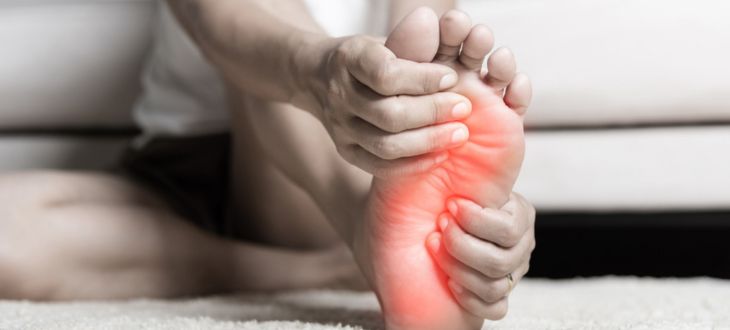
The human foot is an engineering marvel. Comprising 26 bones, 33 joints, and over 100 muscles, tendons, and ligaments, it is designed to bear your entire body weight while providing balance and propulsion. Because of this complexity, even a minor misalignment or injury can lead to debilitating discomfort.
Foot pain is one of the most common reasons patients seek orthopedic care. Whether it is a sharp stabbing in the heel during your first morning steps or a dull ache in the arch after a long day, understanding the root cause is the first step toward recovery. In this guide, we categorize over 30 causes of foot pain based on location and type to help you identify when home care is enough and when it’s time to see a specialist.
Causes of Heel Pain
Heel pain is perhaps the most frequent complaint in orthopedic clinics, often resulting from repetitive stress or structural issues.
- Plantar Fasciitis: Inflammation of the thick band of tissue running across the bottom of your foot, as explained by the National Institutes of Health.
- Heel Spurs: Bony protrusions on the underside of the heel bone, often caused by long-term ligament strain.
- Achilles Tendonitis: Inflammation of the tendon connecting calf muscles to the heel, according to MedlinePlus.
- Bursitis: Swelling of the fluid-filled sacs that cushion the heel joint.
- Sever’s Disease: Common in children, this is an inflammation of the growth plate in the heel.
- Stress Fractures: Tiny cracks in the calcaneus (heel bone) from overuse.
- Haglund’s Deformity: A bony enlargement on the back of the heel, often aggravated by rigid shoes (sometimes called “pump bump”).
Causes of Arch and Midfoot Pain
The arch is the foot’s primary shock absorber. When it fails or is overworked, the pain can radiate throughout the entire limb.
- Flat Feet (Pes Planus): A lack of an arch that causes the foot to roll inward (overpronation).
- High Arches (Pes Cavus): Excessive arch height that places too much pressure on the ball and heel.
- Posterior Tibial Tendon Dysfunction: Failure of the tendon that supports the arch, leading to “fallen arches.”
- Midfoot Osteoarthritis: Wear and tear of the joints in the middle of the foot.
- Lisfranc Injury: Damage to the ligaments or bones in the midfoot, often caused by a twist or fall.
- Extensor Tendonitis: Inflammation of the tendons on the top of the foot, often from lacing shoes too tightly.
Causes of Toe and Forefoot Pain
Pain in the “ball of the foot” or the toes can make walking almost impossible, as these areas bear the weight during propulsion.
- Bunions (Hallux Valgus): A bony bump at the base of the big toe joint.
- Morton’s Neuroma: A thickening of the tissue around a nerve leading to the toes, causing a “pebble in the shoe” sensation, as described in this published journal study.
- Metatarsalgia: A general term for inflammation and pain in the ball of the foot.
- Hammer Toe: An abnormal bend in the middle joint of a toe.
- Mallet Toe: A deformity at the joint nearest the toenail.
- Sesamoiditis: Inflammation of the tiny bones embedded in the tendons under the big toe.
- Gout: A form of arthritis caused by uric acid crystals, most commonly affecting the big toe joint, according to the Centers for Disease Control and Prevention.
- Turf Toe: A sprain of the ligaments around the big toe joint, common in athletes.
- Ingrown Toenails: When the side of a toenail grows into the soft flesh.
- Hallux Rigidus: A form of degenerative arthritis that causes stiffness in the big toe.
Causes of Side and Nerve-Related Pain
Pain on the outer edge (lateral) or inner edge (medial) of the foot often points to nerve or tendon issues.
- Tarsal Tunnel Syndrome: Compression of the posterior tibial nerve (the foot’s version of Carpal Tunnel).
- Peroneal Tendonitis: Inflammation of the tendons that run along the outside of the ankle and foot.
- Cuboid Syndrome: A minor dislocation of the cuboid bone on the outer edge of the foot.
- Diabetic Neuropathy: Nerve damage caused by high blood sugar, leading to burning or tingling, as outlined by the National Institute of Diabetes and Digestive and Kidney Diseases.
- Ankle Sprains: While felt in the ankle, a lateral sprain often causes referred pain along the side of the foot.
- Corns and Calluses: Thickened layers of skin caused by friction that can become painful when deep.
- Ganglion Cysts: Fluid-filled lumps that can press on nerves or tendons.
- Peripheral Artery Disease (PAD): Poor circulation that causes cramping or pain in the feet during exercise, as described by the National Heart, Lung, and Blood Institute.
Effective Foot Pain Prevention
Preventing foot pain is significantly easier than treating a chronic condition like plantar fasciitis. Implement these habits to protect your foundation:
- Choose the Right Footwear: Avoid shoes with narrow toe boxes or excessively high heels. Replace athletic shoes every 300–500 miles.
- Maintain a Healthy Weight: Every extra pound adds significant pressure to the joints of the feet.
- Gradual Activity Increases: Avoid “too much, too soon.” If you are starting a running program, increase your mileage by no more than 10% per week.
- Stretch Regularly: Tight calves are a leading contributor to heel and arch pain. Incorporate daily wall stretches for your Achilles and calf muscles.
- Listen to Your Body: “No pain, no gain” does not apply to foot health. If you feel a sharp ache, rest and ice the area immediately.
When to See an Orthopedic Specialist
While minor soreness may resolve with rest and Home Remedies for Foot Pain, certain symptoms require professional intervention to prevent permanent damage.
You should schedule an appointment with an orthopedic or podiatric specialist if you experience:
- Inability to Bear Weight: If you cannot walk more than a few steps without severe pain.
- Numbness or Tingling: This suggests nerve involvement, such as Morton’s Neuroma or Tarsal Tunnel Syndrome.
- Visible Deformity: If a joint looks out of place or you notice a sudden change in your arch height.
- Persistent Swelling: Edema that does not improve after 48 hours of R.I.C.E. (Rest, Ice, Compression, Elevation).
- Pain That Limits Daily Life: If you find yourself avoiding activities you love because of foot discomfort.
Advanced treatments, such as Physical Therapy for Foot Pain, custom orthotics, or regenerative injections, can often resolve these issues without the need for surgery.
Take the Path to Recovery
Don’t let foot pain keep you on the sidelines. Whether you are dealing with a sports injury or age-related arthritis, our team of specialists is dedicated to getting you back on your feet.
Stop by our Walk-In Clinic for an immediate evaluation, or schedule a comprehensive consultation with one of our Orthopedic Physicians today. Contact us at (386) 255-4596 to start your journey toward pain-free movement.