14 Home Remedies for Finger Pain
1. Rest and Activity Modification
Giving an aching finger a break from repetitive gripping, typing, or texting is often the simplest first step. Cutting back on the motion that aggravates it gives inflamed tissue a chance to calm down before it worsens, and it’s worth noting which specific activities trigger the pain so you can adjust rather than push through it.
2. Ice Therapy
Applying ice for 15–20 minutes reduces swelling after a jam or sprain, following the same RICE principles used for other joint sprains, per MedlinePlus. If you’re unsure whether a finger is jammed or broken, our guide on telling the difference can help.
3. Compression
The “C” in RICE is easy to skip on a finger, but a light wrap or compression glove keeps swelling from building up around an injured joint. For arthritis specifically, a systematic review in Clinical Rehabilitation found that compression gloves eased hand symptoms and improved hand function in people with rheumatoid arthritis and hand osteoarthritis, making them a useful daytime option alongside night splinting.
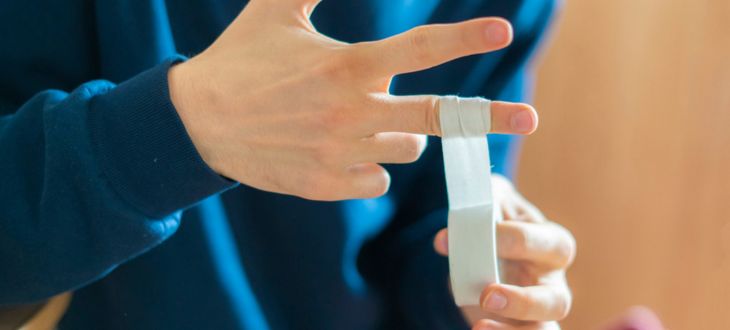
4. Buddy Taping
Taping an injured finger to the one next to it provides gentle support and limits movement without a bulky splint. It’s a common short-term fix for minor sprains, though a jammed finger that doesn’t improve within a few days deserves an X-ray.
5. Warm Compress
Heat helps relax stiff joints and increase blood flow, making it especially useful for arthritis-related finger pain rather than a fresh injury. A warm washcloth or heating pad for 10–15 minutes before activity can ease morning stiffness.
6. Contrast Bath
Alternating between warm and cold water baths can reduce swelling while also easing stiffness, combining the benefits of both heat and cold therapy in one routine. Many patients use this before hand exercises to loosen up the joints first.
7. Gentle Stretches and Range-of-Motion Exercises
Slow, gentle finger stretches help maintain flexibility and reduce stiffness, and a 2024 systematic review found that structured exercise is one of the most consistently effective non-drug treatments for hand osteoarthritis. Avoid pushing through sharp pain during any stretch.
8. Finger Splinting
A small splint can rest an irritated tendon or joint, which is especially helpful for trigger finger, where the tendon catches or locks as it glides through its sheath, according to NCBI’s StatPearls. Splinting at night is often enough to calm mild cases without progressing to injections or surgery. Our article on trigger finger covers this condition in more depth.
9. Epsom Salt Soak
Soaking hands in warm water with Epsom salt is a popular way to ease general achiness and stiffness. While evidence is mostly anecdotal, many patients find the warmth and gentle magnesium soak soothing after a long day of hand-intensive work.
10. Topical NSAIDs and OTC Pain Relievers
Over-the-counter anti-inflammatory creams or oral NSAIDs can reduce pain and swelling from arthritis or overuse injuries. Topical formulas are often preferred for finger joints since they target the area directly with fewer systemic side effects.
11. Paraffin Wax Dips
Dipping fingers in warm paraffin wax delivers deep, even heat to stiff joints, a technique often used in hand therapy clinics for arthritis flare-ups. The wax cools into a glove-like layer that keeps warmth locked in for several minutes.
12. Anti-Inflammatory Diet
Foods rich in omega-3s, along with turmeric and ginger, may help reduce the systemic inflammation associated with arthritis, a condition that affects the finger joints as much as the hips or knees, according to NIAMS. Diet alone won’t resolve joint damage, but it can complement other remedies.
13. Ergonomic Tools and Grips
Built-up pen grips, jar openers, and ergonomic keyboards reduce the strain placed on small finger joints during everyday tasks. Small adjustments like these can prevent repetitive strain from becoming a chronic problem.
14. Self-Massage
Gently massaging the base of the fingers and palm can improve circulation and loosen tight tissue around the joints. This pairs well with warm compresses or a contrast bath as part of a daily stiffness-relief routine.
When to See an Orthopedic Specialist
Home remedies work well for mild, everyday finger pain, but you shouldn’t wait to get help if pain is severe, a finger looks visibly deformed, or you can’t straighten or bend it. Numbness, persistent swelling, a finger that locks in place, or pain that hasn’t improved after a couple of weeks of home care are also signs it’s time for an evaluation rather than another round of remedies. Our hand and wrist specialists and occupational therapy team can diagnose the underlying cause and build a treatment plan, whether that means splinting, injections, or pain management, so you’re treating the actual cause instead of just masking the problem.