Elbow pain can transform simple daily tasks (like gripping a coffee mug or typing an email) into a frustrating challenge. Whether you are an athlete pushing through training or a professional spending hours at a desk, understanding how to relieve elbow pain is the first step toward reclaiming your mobility and quality of life.
At The Orthopedic Clinic, our team of specialists in Sports Medicine and Hand and Upper Extremity surgery focuses on advanced diagnostic and therapeutic techniques to treat joint dysfunction. In this guide, we explore the common causes of discomfort, recognizable symptoms, and actionable ways to find lasting relief.
Common Causes and Symptoms of Elbow Pain
Elbow pain rarely appears without a reason. It is often the result of cumulative strain on the tendons, ligaments, and bones that form the joint. According to the British Journal of General Practice, pathology can arise from any component of the joint, including tendons, bursae, or nerves.
Lateral Epicondylitis (Tennis Elbow)
This is an overuse injury affecting the common extensor tendon on the outside of the elbow, frequently caused by repetitive wrist extension and gripping — common in racquet sports, carpentry, and desk work alike. It presents as tenderness on the outer bony bump of the elbow and weakened grip strength that worsens with lifting or twisting motions.
Medial Epicondylitis (Golfer’s Elbow)
Similar to tennis elbow, this condition affects the tendons on the inside of the elbow and often results from repetitive wrist flexion or overhead throwing motions. Pain on the inner side of the joint may radiate down the forearm and is sometimes accompanied by stiffness when making a fist.
Cubital Tunnel Syndrome
This occurs when the ulnar nerve — commonly known as the “funny bone” nerve — becomes compressed or irritated as it passes through the elbow. Prolonged bending of the elbow (such as holding a phone) is a frequent trigger, producing numbness or tingling in the ring and pinky fingers and occasional weakness in the hand (Javed et al., 2015).
Elbow Bursitis
The olecranon bursa is a fluid-filled sac at the tip of the elbow. If it becomes inflamed due to trauma, prolonged pressure (like leaning on a hard surface), or infection, it can cause significant swelling and tenderness directly at the elbow tip.
7 Ways to Relieve Elbow Pain
To help you stay ahead of discomfort, we have outlined seven effective strategies for relief — ranging from at-home care to professional intervention.
1. Targeted Eccentric Exercises
Recent literature highlights eccentric exercises — where the muscle lengthens under a load — as a gold standard for tendon healing. For tennis elbow, the “Tyler Twist” using a resistance bar or a light weight involves slowly lowering the wrist from an extended position. Aim for 3 sets of 15 repetitions daily, progressing resistance gradually as symptoms improve. This approach addresses the root cause of tendon degeneration rather than simply masking pain.
2. The R.I.C.E. Protocol (Modified)
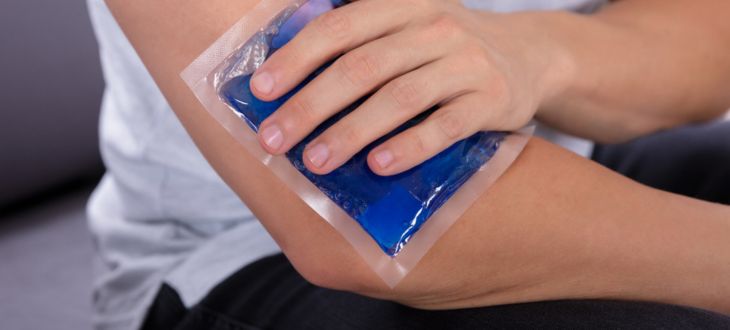
While “Rest” is a staple of injury management, modern sports medicine emphasizes active recovery over complete immobilization. Avoid the specific activity that triggered the pain — not all movement. Apply cold packs for 15 minutes after activity to reduce acute inflammation, use a counterforce brace to redistribute pressure away from the injured tendon, and keep the joint elevated when significant swelling is present.
3. Ergonomic Adjustments
If your pain stems from office work or repetitive occupational tasks, small changes can make a significant difference. Use a vertical mouse to keep the wrist in a neutral position and ensure your keyboard height allows for a 90-degree elbow bend. Reducing constant tension on the forearm extensors throughout the workday is one of the most underutilized strategies for long-term relief. Taking short movement breaks every 45–60 minutes also helps prevent cumulative tendon stress.
4. Instrument-Assisted Soft Tissue Mobilization (IASTM)
Specialists use handheld tools to perform cross-friction massage on the affected area. This technique helps disrupt scar tissue adhesions and stimulates blood flow to poorly vascularized tendons, facilitating faster remodeling of collagen. IASTM is often combined with exercise therapy for best results and is available through our Sports Medicine and physical therapy team.
5. Platelet-Rich Plasma (PRP) Therapy
For chronic pain that has not responded to traditional methods, orthopedic specialists may recommend PRP therapy. This involves injecting a concentrated dose of the patient’s own platelets into the injured area to accelerate the natural healing process of the tendon. PRP is particularly well-suited for cases that have persisted beyond three to six months despite conservative management.
6. Percutaneous Needle Tenotomy (PNT)
PNT is a minimally invasive procedure where a specialist uses a needle to create small micro-traumas in the damaged tendon under ultrasound guidance. This process “reboots” the healing cycle by encouraging neovascularization and new collagen growth. Because it is performed under imaging guidance, it offers a precise and effective alternative to open surgery for the right candidates.
7. Progressive Stretching
Improving flexibility in the wrist flexors and extensors can reduce the chronic pull on the elbow joint. A common and effective stretch involves extending your arm straight out with palm down, then gently pulling your fingers back toward your body with the opposite hand and holding for 30 seconds. Incorporate both flexor and extensor stretches two to three times daily for best results, especially before and after activity.
When to See an Orthopedic Specialist
While minor strains often resolve with home care within a few weeks, certain symptoms require a professional evaluation. The early evaluation of joint pain can prevent long-term complications and improve treatment outcomes.
Schedule a consultation with our Hand and Upper Extremity surgery team if you experience:
- Neurological symptoms: Persistent numbness, tingling, or weakness in the hand or fingers
- Loss of function: Inability to carry objects or use the arm for daily tasks without significant pain
- Visible deformity or swelling that does not subside within 48–72 hours of rest and ice
- Night pain that prevents sleep or occurs even when the arm is completely at rest
- Joint locking: A sensation that the elbow is catching, clicking, or cannot fully straighten
Early intervention by a specialist in Sports Medicine or Hand and Upper Extremity surgery can prevent a temporary strain from becoming a chronic condition requiring more invasive care. MedlinePlus recommends early evaluation for elbow pain that does not improve with initial home care.
Take the First Step Toward Recovery
Don’t let elbow pain interfere with your daily life or productivity. Whether you’re recovering from an injury or dealing with ongoing discomfort, early evaluation can help you return to normal movement faster and maintain your active range of motion.
Visit our TOC Walk-In Clinic for same-day care, or schedule an appointment with one of our specialists for a comprehensive evaluation and treatment plan.