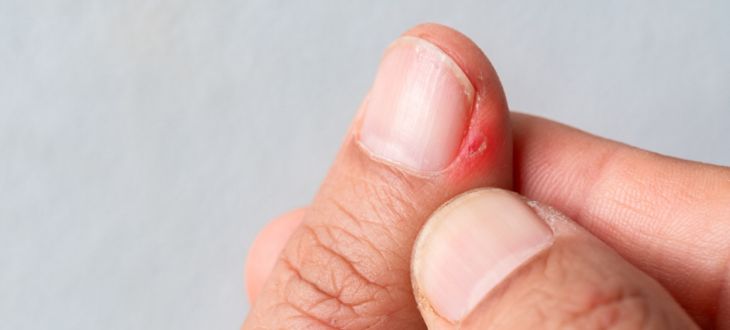
“Why does my finger hurt?” isn’t always an easy question to answer on your own. Finger pain can show up at the very tip, in the middle knuckle, or at the base near your palm. It might flare up only when you bend a specific finger, or it might come with numbness that seems to target your ring and pinky finger but skip your thumb entirely. You might notice it only in your index (pointer) finger after a day of typing or gaming, or across several fingers at once if an underlying disease is involved. Because each finger shares tendons, nerves, and joints with the rest of the hand — but also has its own quirks — the pattern of your pain often points to a specific cause. Below, we walk through 19 common causes of finger pain, organized by what they typically feel like and which fingers they tend to affect.
Injury-Related Causes
1. Jammed or Sprained Finger
A forceful impact, like catching a ball wrong, can stretch or tear the ligaments at a finger’s middle knuckle (PIP joint). Swelling and stiffness when bending the finger are common.
2. Mallet Finger
When something strikes an extended fingertip, it can tear the tendon that straightens it, leaving the tip permanently drooped. This most often affects the middle or ring finger in sports like basketball and volleyball.
3. Fractured Finger
A break in one of the small bones can happen in any finger, from a fall, a slammed door, or a sports injury. Swelling, bruising, and an obvious deformity are red flags.
4. Dislocated Finger Joint
A joint knocked out of alignment, often at the middle knuckle, causes sudden pain and an abnormal-looking finger that needs prompt realignment.
5. Ligament Injury at the Thumb (Skier’s Thumb)
A fall onto an outstretched hand or a forceful sideways bend of the thumb can tear the ligament at its base, causing pain and instability specifically when pinching or gripping.
6. Repetitive Strain Injury (Texting or Gaming Thumb)
Constant texting, scrolling, or gaming can inflame the tendons of the thumb and index finger, leading to a dull ache or sharp pain that worsens with continued use. This is sometimes grouped with De Quervain’s tenosynovitis when it affects the tendons on the thumb side of the wrist.
Tendon and Joint Conditions
7. Trigger Finger
Inflammation of the tendon sheath causes a finger — most often the ring finger or thumb — to catch, lock, or snap when you bend or straighten it. Learn more in our guide to trigger finger symptoms and treatment.
8. Osteoarthritis
Wear-and-tear breakdown of cartilage commonly affects the middle and end joints of the fingers, sometimes forming small bony bumps. Hand osteoarthritis tends to run in families and is more common in women after menopause.
9. Thumb (CMC) Joint Arthritis
Pain at the base of the thumb during pinching, gripping, or turning a key often points to arthritis in the carpometacarpal joint. Read more about CMC joint injuries.
10. Rheumatoid Arthritis
This autoimmune condition typically affects the knuckles of multiple fingers on both hands at once. RA often appears in a symmetrical pattern in the hands and wrists.
11. Gout
Sudden, intense pain and swelling in a single finger joint can result from a gout flare. Gout flares are caused by a buildup of uric acid crystals and typically last one to two weeks.
12. Dupuytren’s Contracture
Thickened tissue in the palm gradually pulls the ring and pinky finger into a permanently bent position, usually starting as a painless nodule. Our hand and wrist care team offers both nonsurgical and surgical treatment.
13. Ganglion Cyst
A fluid-filled lump near a finger joint or tendon can ache with repetitive motion, even though many cause no symptoms at all.
Nerve-Related Causes
14. Carpal Tunnel Syndrome
Compression of the median nerve at the wrist causes numbness, tingling, and pain in the thumb, index, and middle finger — but typically spares the pinky. See our tips for easing carpal tunnel hand pain.
15. Cubital Tunnel Syndrome
Compression of the ulnar nerve at the elbow causes numbness and tingling specifically in the ring and pinky finger, often worse when the elbow stays bent for a long time. Bumping or resting on the “funny bone” area repeatedly can aggravate this nerve.
Skin, Nail, and Circulation Issues
16. Paronychia
A bacterial or fungal infection around the edge of the fingernail causes redness, swelling, and tenderness, often after a hangnail or manicure injury. Mild cases often respond to warm soaks, but pus-filled infections may need to be drained by a provider.
17. Felon
An infection deep in the fleshy pad of the fingertip causes throbbing pain and swelling that can become a medical emergency if it isn’t treated promptly. Because the pad is divided into small compartments, pressure builds quickly and can cut off blood flow to the tissue if left untreated.
18. Ingrown Fingernail
When the nail edge grows into the surrounding skin, it causes localized pain, redness, and sometimes drainage at the side of the fingertip. This is far less common in fingers than toes but can still occur with trauma or nail-biting.
19. Raynaud’s Phenomenon
Cold temperatures or stress can trigger the small blood vessels in the fingertips to narrow suddenly, causing pain, numbness, and a white-to-blue color change. Attacks usually affect the fingers and toes and can be triggered by cold or emotional stress.
How an Orthopedic Specialist Can Help
With so many possible causes tied to specific fingers, joints, and even nerves higher up the arm, pinpointing the source of your pain isn’t always straightforward. An orthopedic specialist can take a detailed history, examine which fingers and joints are affected, and order imaging like X-rays or nerve conduction studies to confirm a diagnosis rather than relying on guesswork. They can also distinguish between conditions that feel similar at first glance — for instance, numbness in the ring and pinky finger could point to cubital tunnel syndrome at the elbow or Dupuytren’s contracture in the palm, and telling the two apart changes the entire treatment plan.
At The Orthopedic Clinic, our board-certified, fellowship-trained hand and upper extremity surgeons treat the full range of finger conditions, from ligament injuries and trigger finger to arthritis, nerve compression, and Dupuytren’s contracture. Care typically starts with the least invasive option appropriate for your condition — splinting, activity changes, or injections — and progresses to surgery only when it offers the best path to lasting relief. Explore more on our Hand and Finger blog, or visit our physicians page to find the right specialist for your care.
Don’t Wait Out Persistent Finger Pain
Finger pain that lingers, spreads to multiple fingers, or comes with numbness, a locked joint, or a visible deformity deserves a proper diagnosis. Understanding exactly which structure is involved — and which finger it’s affecting — is the first step toward effective treatment. A specialist can also help you tell the difference between something that will resolve with a few days of rest and a condition that could worsen without proper care, saving you from either overreacting to a minor sprain or underestimating a more serious injury.
Visit our TOC Walk-In Clinic for same-day care, or schedule an appointment with one of our specialists for a comprehensive evaluation and treatment plan.