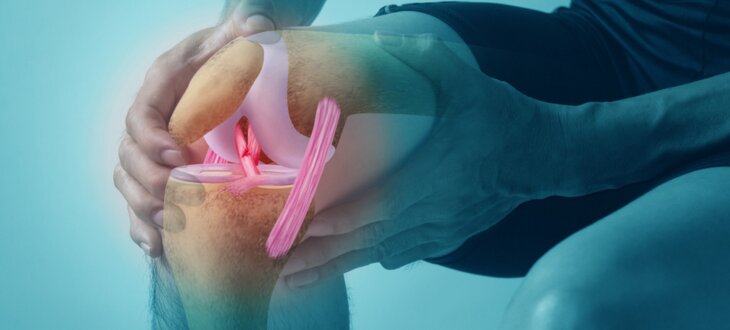
If you’ve recently felt a sudden pop in your knee, noticed swelling that doesn’t seem to fade, or you’re struggling to bend or straighten your leg comfortably, you may be wondering whether you’ve torn your meniscus. Meniscus tears are one of the most common knee injuries — and they don’t just happen to athletes. Everyday movements like squatting, turning too quickly, or lifting something heavy can be enough to cause one.
The good news is that most people feel more at ease once they understand what’s happening inside the knee and what treatment options are available. This guide walks you through the most common symptoms of a meniscus tear, how tears occur, how they are diagnosed, and when it’s time to see an orthopedic knee specialist for help.
What Is the Meniscus?
The meniscus is a C-shaped structure made of tough fibrocartilage that cushions and stabilizes your knee joint. Each knee has two menisci — a medial (inner) meniscus and a lateral (outer) meniscus. They act as shock absorbers, helping distribute weight evenly across the knee.
When the meniscus tears, this smooth, shock-absorbing surface is disrupted, which can lead to pain, swelling, stiffness, and mechanical problems such as locking or catching. Learn more about additional causes of knee discomfort in our knee pain overview.
9 Common Meniscus Tear Symptoms
Some of the most common symptoms of a meniscus tear include:
1. Popping Sensation at the Time of Injury
Many people describe hearing or feeling a pop when the tear occurs, often during a sudden twist or pivot.
2. Pain Along the Joint Line
This pain is usually felt along the inner or outer edge of the knee.
- Medial tears: Pain on the inside of the knee
- Lateral tears: Pain on the outside of the knee
3. Swelling or Fluid Buildup
Swelling may appear within hours or gradually over 1 – 2 days.
4. Stiffness or Difficulty Bending and Straightening
A torn meniscus often limits motion, making activities like kneeling, squatting, or fully extending the knee uncomfortable.
5. Locking or Catching Sensations
A torn flap of meniscus tissue can interfere with knee movement, causing your knee to feel stuck or locked in place.
6. Knee Instability or a Feeling of Giving Way
This can be especially noticeable when walking, turning, or going up and down stairs.
7. Limited Range of Motion
Pain and swelling can restrict how far you can bend or straighten your knee.
8. Delayed Pain After Activity
Some people feel fine immediately after the injury but wake up the next day with significant pain or swelling.
9. Clicking or Grinding Sensations
Also called crepitus, these sensations may occur when torn tissue disrupts smooth joint motion.
Traumatic vs. Degenerative Meniscus Tears
Traumatic Tears
These happen suddenly, often during sports or pivoting motions. Traumatic tears tend to cause:
- Popping sensation
- Immediate swelling
- Localized pain along the joint line
Degenerative Tears
Degenerative tears develop gradually due to aging and wear. They are more common in adults over 40 and often occur alongside osteoarthritis. A 2020 study published in the Journal of Orthopaedic Research found that age-related changes to the meniscus significantly increase the likelihood of degenerative tearing.
What Causes Meniscus Tears?
Common Causes
- Twisting or pivoting the knee during sports
- Deep squatting or heavy lifting
- Sudden directional changes
- Repetitive kneeling or bending
Risk Factors
- Age 40 and older
- Knee osteoarthritis
- Previous knee injuries
- High-impact athletic activity
Self-Assessment: How to Tell If You Might Have a Meniscus Tear
You may have a tear if you experience:
- Popping sensation followed by pain
- Swelling that worsens or persists
- Pain along the joint line
- Locking or catching in the knee
- Difficulty bearing weight
- Symptoms that last more than 48 – 72 hours
These signs should prompt an evaluation with an orthopedic knee specialist.
Why Meniscus Tears Don’t Always Heal on Their Own
Only the outer third of the meniscus — the red zone — has enough blood supply to support natural healing. Tears in the inner regions receive little to no blood flow and typically do not heal without medical intervention.
The National Library of Medicine notes that blood supply decreases significantly toward the center of the meniscus, limiting natural healing capacity.
How Meniscus Tears Are Diagnosed
Physical Examination
Orthopedic knee specialists perform targeted tests such as:
- McMurray test — rotating the knee to feel for clicking or pain
- Joint line tenderness assessment
- Range of motion evaluation
Diagnostic Imaging
- MRI — the most accurate imaging for confirming a tear
- X-ray — used to rule out fractures or arthritis
Treatment Options for Meniscus Tears
Non-Surgical Treatment
- Rest and activity modification
- Ice and anti-inflammatory medications
- Physical therapy to strengthen the knee and improve mobility
- Steroid injections (in select cases)
Arthroscopic Surgery
If the tear is large, unstable, or does not respond to conservative care, minimally invasive arthroscopic surgery may be recommended. Procedures may include:
- Meniscus repair: Suturing the torn portion
- Partial meniscectomy: Trimming unstable or damaged tissue
Recent research supports repairing the meniscus whenever possible to protect long-term joint health.
What to Expect During Recovery
Non-Surgical Recovery
Most individuals improve within 4 – 6 weeks.
Recovery After Meniscus Repair
- More gradual recovery to allow the tissue to heal
- Physical therapy for 3 – 4 months
- Full recovery typically occurs in 4 – 6 months
Recovery After Partial Meniscectomy
Many patients return to daily activities within 4 – 6 weeks.
When to See an Orthopedic Knee Specialist
If you are experiencing ongoing pain, instability, swelling, or mechanical symptoms like locking or catching, it’s important to seek evaluation. Meniscus tears can worsen over time if left untreated, especially when they interfere with normal movement.
The orthopedic knee specialists at The Orthopedic Clinic provide advanced evaluation and personalized treatment plans to help you return to the activities you enjoy.
Don’t Let Knee Pain Slow You Down
If you’re experiencing symptoms of a meniscus tear — such as pain, swelling, locking, or instability — our orthopedic knee specialists can help. We offer expert diagnosis and individualized treatment to restore comfort and mobility.
Call (386) 255-4596 or schedule your appointment online today.