“Why does my hand hurt?” is one of the most common questions patients bring to our office, and the answer isn’t always straightforward. Hand pain can show up in the palm, across the back of the hand, at the base of the thumb, or only when you’re writing, typing, or gripping something tightly. It might be a dull ache that builds gradually, a sharp pain triggered by a specific movement, or numbness and tingling that seems to come out of nowhere. Because the hand is packed with small joints, tendons, ligaments, and nerves, pinpointing the exact source of your discomfort usually takes a closer look.
11 Common Causes of Hand Pain
Below, we break down 11 common causes of hand pain, from everyday overuse injuries to underlying diseases, so you can better understand what might be going on. (If you’re also dealing with discomfort further up the limb, our guide to why your arm hurts may help too.)
1. Carpal Tunnel Syndrome
Carpal tunnel syndrome (CTS) develops when the median nerve becomes compressed as it passes through the wrist, causing numbness, tingling, and burning pain in the thumb, index, and middle fingers. Symptoms often worsen at night or during repetitive tasks like typing. For relief strategies, see our post on easing carpal tunnel hand pain.
2. Trigger Finger
Trigger finger occurs when the tendon sheath in a finger or thumb becomes inflamed, causing the digit to catch, lock, or snap when you bend or straighten it. It’s especially common in people who do repetitive gripping tasks. Learn more in our full breakdown of trigger finger symptoms, causes, and treatment.
3. Osteoarthritis of the Hand
Osteoarthritis is a wear-and-tear condition that breaks down the cartilage cushioning your joints, often targeting the base of the thumb and the small joints of the fingers. Hand osteoarthritis tends to run in families and is more common in women, often developing after menopause.
4. Rheumatoid Arthritis
Unlike osteoarthritis, rheumatoid arthritis (RA) is an autoimmune disease that causes the body’s immune system to attack the joint lining, leading to swelling, stiffness, and pain that typically affects both hands at once. Rheumatoid Arthritis most commonly appears in the wrists, hands, and feet in a symmetrical pattern, and early diagnosis can help prevent joint damage.
5. Gout
Gout is a form of inflammatory arthritis caused by a buildup of uric acid crystals in the joints. While it’s best known for causing sudden, severe pain in the big toe, gout flares can also strike the fingers, wrists, and knuckles. Gout flares typically last one to two weeks and can be triggered by diet, dehydration, or certain medications.
6. Carpometacarpal (CMC) Joint Pain
Pain at the base of the thumb, especially when pinching, gripping, or turning a key, often points to a problem with the carpometacarpal joint. This joint absorbs an enormous amount of stress with everyday hand use, and it’s a common site for both arthritis and traumatic injury. Read more about CMC joint injuries and how they’re treated.
7. Writer’s Cramp
If your hand hurts specifically when writing, you may be dealing with writer’s cramp, a task-specific condition that causes involuntary muscle contractions in the hand and forearm. It can result from gripping a pen too tightly, poor hand positioning, or repetitive strain, and in some cases is linked to a neurological condition called focal hand dystonia. Our detailed guide to writer’s cramp signs, symptoms, and treatment options covers this condition in depth.
8. Ganglion Cysts
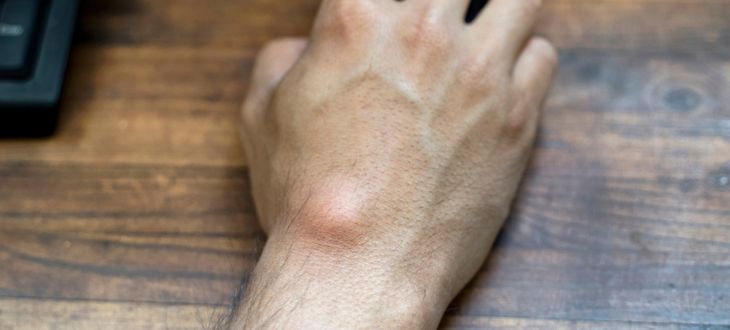
A ganglion cyst is a fluid-filled lump that typically forms on the back of the wrist or the palm side of the hand, near a joint or tendon. These cysts can be soft or firm, and while some cause no symptoms at all, others become tender or ache with repetitive motion. Many ganglion cysts shrink on their own, but persistent or painful ones may need to be drained or surgically removed.
9. Dupuytren’s Contracture
Dupuytren’s contracture causes the connective tissue in the palm to thicken and tighten over time, eventually pulling one or more fingers into a permanently bent position. It often starts as a small, painless nodule in the palm before progressing, and it’s more common in men over 50 with a family history of the condition. Our hand and wrist care team offers both nonsurgical and surgical treatment options depending on severity.
10. Diabetes and Other Systemic Diseases
Hand pain isn’t always caused by a problem in the hand itself. Diseases like diabetes can damage the nerves that supply the hand, a condition known as focal neuropathy, which shares many symptoms with carpal tunnel syndrome. People with diabetes are more likely to develop nerve entrapments like carpal tunnel syndrome than the general population. Thyroid disorders and lupus can also contribute to hand pain and stiffness.
11. Fractures and Sprains
Not all hand pain builds up gradually — sometimes it starts in an instant. A fall onto an outstretched hand, a jammed finger during sports, or a direct blow can fracture one of the many small bones in the hand or sprain the ligaments that hold a joint together. Swelling, bruising, and difficulty moving the affected finger or hand are common signs. Even a “minor” jam or sprain should be evaluated, since an untreated fracture can heal improperly and lead to long-term stiffness or reduced grip strength.
If your hand pain seems to come and go along with other symptoms elsewhere in your body, it’s worth mentioning to both your primary care provider and an orthopedic specialist, since some of these conditions require managing the underlying disease alongside the joint symptoms. For more overlapping wrist-related causes, take a look at our list of 15 causes of wrist pain.
How an Orthopedic Specialist Can Help
With so many possible causes behind a single symptom, self-diagnosing hand pain can be tricky — and treating the wrong condition can waste time while the real problem gets worse. An orthopedic specialist can examine your hand, review your medical history, and order imaging like X-rays, ultrasound, or nerve conduction studies when needed to pinpoint exactly what’s causing your pain. They can also tell the difference between conditions that look similar on the surface, such as trigger finger, De Quervain’s tendinitis, and CMC joint arthritis, which all cause pain near the base of the thumb but require very different treatment approaches.
At The Orthopedic Clinic, our board-certified, fellowship-trained hand and upper extremity surgeons diagnose and treat the full spectrum of hand conditions, from arthritis and trigger finger to nerve compression, ganglion cysts, and Dupuytren’s contracture. Treatment almost always starts conservatively, with options like splinting, activity modification, or injections, and moves toward surgery only when it’s the best path to lasting relief.
Don’t Ignore Persistent Hand Pain
Hand pain that lingers for more than a couple of weeks, worsens over time, or comes with numbness, swelling, or a locked joint is worth having checked out. The sooner an accurate diagnosis is made, the sooner you can start a treatment plan that actually addresses the cause rather than just masking the symptoms. Understanding what’s behind your symptoms is the first step toward real relief — schedule a consultation with The Orthopedic Clinic today to get an accurate diagnosis and a treatment plan built around your needs.
Visit our TOC Walk-In Clinic for same-day care, or schedule an appointment with one of our specialists for a comprehensive evaluation and treatment plan.